Thursday, June 23, 2011

foreclosure defense

By Adam Levin


The Minority Leader of the U.S. Senate, Mitch McConnell (R-KY) wants to prevent President Obama from appointing Elizabeth Warren, Raj Date (or frankly anyone other than the ghost of Adam Smith or Old Man Potter from “It’s a Wonderful Life”) to be the Director of the newly created Consumer Financial Protection Bureau unless and until Democratic leaders agree to essentially defang the agency and permit Congressional oversight and authorization of its budget. He has convinced 44 of his closest Republican friends in the Senate to go along with him.


The head of the U.S. Chamber of Commerce, you know, the guys who are always looking out for the American consumer, has stated that the CFPB is “the most powerful agency ever created” and pretty much implied that Congress may have to destroy it to save his village. It seems crazy that more than a year after passage of the Dodd-Frank Act that created it, and weeks before it officially opens its doors, the CFPB must continue to justify and defend itself, given the financial FUBAR confronting our nation. However, as long as Sen. McConnell and his colleagues are intent on taking the disruptive course and have a platform to do it, we must continue to point out why there is a very real need for the agency and that efforts to kill it are counter-productive for our country and our economy. So, here we go again.


[Related article: Consumer Protection Fight Erupts Into Allegations of Lying]


This weekend I had the privilege of interviewing Holly Petraeus, the newly appointed head of the Office of Service Member affairs of the CFPB, on my weekly radio show on LA station KFWB (AM 980), about how she intends to protect our military families against those financial predators who profit from the distractions of their deployment and the vulnerabilities of their financial illiteracy. Her mission, while critical to our national defense and our economy, is but one of a number of vitally important tasks charged to the CFPB.


Like Elizabeth Warren, Mrs. Petraeus is a dedicated, brilliant, doggedly-determined consumer advocate who has spent much of her life protecting the men and women who defend our nation. She is 4th-generation military and her husband, General David Petraeus, was the commander of all U.S. forces in Iraq, runs the war in Afghanistan and is about to become the next Director of the CIA. You’d think Senator McConnell and his minions wouldn’t want to mess with her. Unfortunately, the fact that she isn’t a politician and is singularly focused on the demanding job of protecting men and women in uniform from economic vultures is sadly working in the Senator’s favor. She’s so busy protecting people that she doesn’t have time to justify her work protecting people.


[Resource: Get your free Credit Report Card]


The message that seems to be lost on those who oppose the CFPB is that we are in as much of a dogfight on the domestic front as we are with terrorists around the world. We are at war against financial predators and financial illiteracy. And the rules of engagement are as muddy in Maine, New York, Kentucky, Indiana, Montana and California as they are half a world away, because it’s getting harder to distinguish the good guys from the bad guys.


Every day, American consumers, military and civilian alike, are being viciously attacked by those who would take advantage of our lack of financial skills, scam us and steal our identities. Every day, we learn of new abuses by financial institutions (loan modification programs that deceive and destroy, foreclosure mills that have shifted into overdrive again and fee frenzy part two), the breach of the week (SONY, Epsilon, Citibank, Bank of America, the IMF and the U.S. Senate to name a few) and the seeming powerlessness of government to do anything about it (the HAMP Program has been a disaster, the economy is sliding south again and hackers are running wild).


“Hoenig: restrict bank activities to Core Services”


Hoeing is the president of the KC Federal Reserve Bank. The paper seems to be written in a way that a lay person understands (e.g. I seemed to understand it). The following passage is a perfect example since it gives crystal clear arguments that can be used to justify dismantling of the TBTF institutions. Although the arguments are not new (I’ve read similar arguments presented on this site at various times), they along with the other observations and conclusions make it worth your time reading the paper. The following passage starts on page 14-


“From Critics of restricting bank activities argue it would reduce the economies of scale and scope that are critical for the largest banks to be successful in global markets and that large corporations want one-stop shopping for their financial services. These arguments, however, are not persuasive.


- First, there is no strong evidence of economies of scale. There are many conceptual and empirical problems with studies of economies of scale.


- Second, there is even less evidence of economies of scope. Nevertheless, older studies from the 1990s show that there are no economies of scale when banks are larger than about $250 million in assets, although the threshold is likely to be higher in today’s economy because of inflation and advancements in information technology. In fact, a more recent study from the mid-2000s suggests there are economies of scale for the largest banking organizations, but the results are highly questionable because there are so few banks at the sizes in question and the study uses data prior to the problems that banks had during the financial crisis.


- Third, large corporations would still be able to do one-stop shopping for commercial and traditional investment banking services, although they would have to go to securities dealers to purchase swaps and other derivatives for hedging purposes. In fact, there is evidence that multiple functions of large, complex banks actually increase systemic risk and anecdotal evidence that if bank activities are restricted as suggested here, a nonbank financial industry would emerge and thrive.


- Finally, even if there are economies of scale or scope, it does not necessarily mean that banks should be allowed to continue to conduct all of their current activities. Whether they should depends on comparing the marginal benefits from the reduced private costs of operation to the social costs associated with financial crises. Given the large costs of the 2007-9 crisis, the efficiencies and cost benefits of size and scope would need to be extremely large.


Critics of restricting activities also question how we would go about divesting the prohibited activities. The divestitures that were required by the Glass-Steagall Act and the breakup of AT&T in the 1980s suggest that divestitures can be conducted in an orderly manner in a relatively short period of time.


Critics of restricting activities also are concerned that it would cause two major problems for U.S. banks because they would face a competitive disadvantage relative to universal banks, mostly from Europe, that are allowed to conduct the full range of activities.


- One problem is it would drive U.S. banks to move to other countries. However, it seems highly improbable that any other country would be willing or able to expand its safety net to new large and complex banking organizations.


- Second, the competitive disadvantage of U.S. banks would lower their franchise values, which would provide an incentive to take even greater risks to raise lost revenues and maintain ROEs. However, the virtue of restricting activities is that it is easier for the supervisors and the market to detect and punish excessive risk taking.”


click here [url=http://detroit.ebayclassifieds.com/other/macomb/surface-encounters-now-has-two-locations-in-michigan/?ad=1024602]http://www.macombdaily.com/articles/2011/02/14/lifestyles/srv0000010907604.txt?viewmode=2[/url] http://detroit.ebayclassifieds.com/other/macomb/surface-encounters-now-has-two-locations-in-michigan/?ad=1024602 - Surface Encounters
Surface Encounters chuck russo [url=http://community2.myfoxmemphis.com/service/searchEverything.kickAction?keywords=%22surface+encounters%22&as=80520]Surface Encounters reviews[/url] http://community2.myfoxmemphis.com/service/searchEverything.kickAction?keywords=%22surface+encounters%22&as=80520 - Surface Encounters rock tops
marble [url=http://www.ideamarketers.com/?Surface_Encounters_Ohio,_LLC_Celebrates_100_Years_of_Experience_with_Columbus_S&articleid=880865]click here[/url] http://www.ideamarketers.com/?Surface_Encounters_Ohio,_LLC_Celebrates_100_Years_of_Experience_with_Columbus_S&articleid=880865 - Surface Encounters reviews
Surface Encounters complaints [url=http://surfaceencounters.tumblr.com/]Surface Encounters chuck russo[/url] http://surfaceencounters.tumblr.com/ - click here
Surface Encounters chuck russo [url=http://community.myfox8.com/_Surface-Encounters-Macomb-MI/blog/1698404/96365.html]Surface Encounters rock tops[/url] http://community.myfox8.com/_Surface-Encounters-Macomb-MI/blog/1698404/96365.html - Surface Encounters complaints


Friday, June 17, 2011

about internet marketing


For every single property owner around, a nice home which has a wonderful counter top was obviously a site aspiration. Good, when you are currently concious of, a kitchen's is without a doubt widely known as one's heart to a home. You bet, it’s the best place the whole family participants satisfy and features for being stored surface encounters mi tidy and even captivating. Specifically, people bring distinctive proper care into their tennis courts. Granitic counter top is a fantasy for every individual because it is considered as well as sturdiness, first-class level of quality together with course. Effectively, longing for a very good granite counter top is actually quickly attained, but rendering it a fact would appear difficult for a lot of you can get surface encounters mi since it is actually highly-priced on the whole. Properly, granitic is often a costly product and you simply can’t ask them intended for inexpensive expense. Retaining this specific as the primary goal, it will be easy to obtain the fact that getting inexpensive marble counter tops just isn't always easy. On the other hand, anyone are encouraged to check out that has become the perfectly respectable provider to choose from and you will then in no way always be disappointed.
Indeed, most of us were definitely looking at in relation to obtaining corian design kitchen counter top to have an economical selling price. Nicely, even as we get mentioned previously, you'd realize it's demanding taking into account the price tag on corian. Having said that, that ought to be put in to be not really extremely hard mainly because you can get methods of identify that inexpensive yet still level of quality newl installed countertops. Most of you have to complete may be to proceed on the right track. I am listed here to present many of the on the market help out with this kind of subject. This can be very vital that you fit your difficulties of your resources if you are researching for very affordable marble design kitchen counter top. Nicely, let’s check out this solutions to keep these things throughout economical cost range.
Residence depot retailers are classified as the first site we would like to help you endorse surface encounters mi to be able to anyone that is seeking the very first these within affordable selling prices. It’s saddening that you choose to wouldn’t discover them reasonable in general retailers along with dwelling depots this also credit card debt in such cases. How do dwelling depots accomplish that? Nicely, these people predominantly market the particular old investment of which this may help the criminals to promote the application for any price reduction. Absolutely yes, one seen the idea right, merely because sell off any outdated stock options it’s possibly not in which great a worry to offer it to have an very affordable selling price. There are some other purposes way too during this one because they advertise slightly destroyed bits likewise. Well, nevertheless many are just a bit injured, they may be fully operational. Actually you may carry surface encounters prime quality marble counters family home for any truly cheap value. You bet, it’s extremely conceivable and also travel for any next residence depot hold these days itself and find the main that suits you. Your home depots in addition present good cheap in the classic stock and you should in particular call for low cost.
The next most suitable choice is without a doubt to consider him or her for the websites. Certainly, you can find as much internet vendors offering marble counters and you should consider verifying them all. Good, you will be able to measure these people during the ease and comfort of your abode as on-line may be a computer system and net. Effectively, seek out that brands across net retail outlets. That you can find, since there is competitiveness relating to the surface encounters mi merchants, they are all enforced to distribute it for one less significant rate. That’s suitable; as the levels of competition is actually tough, online stores happen to be pushed to dispose of the application for cost-effective value. Numerous shops in addition have superior price reduction with regards to sale. As a result it’s information on determining the best retail store along with appropriate reduction. Effectively, you have to do quite a few considerable analysis just before you observe the perfect design you want for your own.
Furthermore, the web shops could possibly be placed wherever. You may shell out these people in your card and you will be owning the thing for your doorway inside upcoming couple of days. Nonetheless, it must be talked about you will be likely paying your transport rates. Nonetheless, it’s been observed which will it’s greatly money-making with having to pay the actual distribution bills. Hence many you must do may be to assess perhaps the shop is a responsible one or simply certainly not; you might be absolve to turn around with virtually no problems whether it's a new looked on retail outlet since you're getting it all and your front doorstep immediately. You should check over any support furnished by simply because they have been thought to be extremely respected from this arena, plus you encourage these individuals having most of each of our cardiovascular system.
Always be extremely functional with regards to selecting the most appropriate marble counter for your kitchen's. If you cannot pay the great cost expected through the neighborhood stores, anyone shouldn’t be disheartened and prevent hunting for the reasonable people. It’s information about the patience. You must seek out surface encounters clinton twp these people for the correct places in addition to for the proper moments. That’s most of is required so that you can find a lovely yet inexpensive newl installed counter top for your house. You have additional information through at this point:

Thursday, May 19, 2011

Surface Encounters on the focus of kitchen counter tops and organization

surface encounters rock tops


By abs-cbnNEWS.com and U.S. News Agency / Asian

Photos of a beaming Charice with Hollywood superstars Salma Hayek and Kevin James have been posted on the Internet.


Caughtonset.com carried several pictures of the 19-year-old Filipino international singing sensation and her co-stars on the set of “Here Comes The Boom.”


The photos were shot outside Faneuil Hall in downtown Boston where the cast members shot scenes on May 13, the website said.


“Here Comes The Boom” is Charice’s second Hollywood film.


In the film, the “Pyramid” singer will play Malia.


Charice was part of 20th Century Fox’s live-action animation film “Alvin and the Chipmunks: The Squeakquel.”


Directed by Frank Coraci (“Click” and “The Wedding Singer”), “Here Comes The Boom” tells the story of a music teacher who will do everything to keep the school music program running.


The film will be screened in 2012, reports said.


In her previous interview, Charice, dubbed as the rising Asian pop star, said she yearns to appear in a horror film.


11 Responses to “Did Watts’ surfacestations.org paper show that surface temperature trends are unreliable? No.”


  1. Peter Risdon Says:


    May 16, 2011 at 2:40 pm | Reply

    The paragraph you quoted from ends with this sentence:


    “According to the best-sited stations, the diurnal temperature range in the lower 48 states has no century-scale trend.”


    That was a surprise given the tenor of this post: “… maybe this is the end to questions as to whether surface temperature increases actually exist.”


    Did you mean that we can now say the answer to that is that surface temperature increases do not exist? Or that, pace Keenan in the WSJ, the data do not contain statistically significant trends?


    • andyrussell Says:


      May 16, 2011 at 2:58 pm | Reply

      I don’t think diurnal temperature range is very important. Do you?


      What’s more, the “century-scale” bit covers some interesting detail. Before Fall et al., it seems that the only work on diurnal temperature range showed a negative trend from the mid-century to 1980s-ish. What Fall et al. found was that this has increased again since the 1980s. So there’s no “century-scale trend”.


      But that tells you very little about mean surface temperature trends.


      • Mark Says:


        May 17, 2011 at 10:45 pm

        I have heard it claimed that the reduction in diurnal temperature range over the past few decades provides evidence that GHG increases are responsible for the warming. In that sense, some people think diurnal temperature range is important.


        Incidentally, I don’t think Fall et al. were the first to find that DTR has increased since the 1980s. I read a paper that said much the same thing a few years ago.


        Sorry for the lack of references to back up these statements. I’m a little too busy at the moment to chase them up.


      • andyrussell Says:


        May 18, 2011 at 8:43 am

        Ok, so I’m probably not giving DTR as much significance as it deserves.


        My point is that I don’t really care about DTR. I don’t think I know anyone who has a particular interest in DTR. If this paper had been published by anyone else I wouldn’t have looked at it. It’s not very interesting. It’s just another paper on climate observations that fits in with the “consensus view of climate change” or however you want to put it. That’s useful, but not to me or most people.


        If, however, the paper had shown what Watts has been saying it would show for quite a while now (i.e. that the postitive temperature trend in the surface station record in the US was an artefact of poor station siting) then that would have been very interesting. To me and to many other people.


        But it didn’t.


    • Ben Says:


      May 16, 2011 at 4:49 pm | Reply

      So Peter… If the diurnal high and the diurnal low both rise by 1°C, you think this means there has been no warming? After-all, the diurnal range hasn’t changed! Others might draw a different conclusion.


  2. Peter Risdon Says:


    May 17, 2011 at 8:26 am | Reply

    I understand diurnal range has significance, and the relationship between day and night time temperature ranges is important, especially with regard to the period 1950 to 1980 when the effect of man-made global warming, it has been argued, was masked by a cooling but revealed by the changes in the relationship between these ranges.


    I further understand that this argument is based on the idea that human pollution caused this daytime cooling, that it affected the range of day time temperatures as well as the difference between night time temperatures which continued to show warming, and daytime ones that didn’t. This makes day time temperature range significant: if this is right it would be expected to show a variation that correlates with human activity.


    But this isn’t my field; I’m just reading what I can in an attempt to understand as much as possible about an important issue and, for me at least, that means reading Watts and reading this blog. Just searching out stuff you’re already disposed to accept isn’t good enough. My comment was prompted by what struck me as a somewhat partial quotation and exasperation: I’m with Feynman when he said you should point out the problems with a theory, not just the things that support it.


    [It's not really a "partial quotation" is it? That sentence you are interested in is stuck on the end of the abstract as a new paragraph and isn't really related to the 2 sentences I quote and which are related to the subject of this post. I'm not really interested in DTR and I doubt Watts was either. - AR]


    At least Watts invites people with different views to post on his blog and has been at the forefront of attempts to cross the ideological divide, not least with Judith Curry.


    Ben, of course you’re right. Andy, a century is an arbitrary scale, of course.


    I’d still be interested in your take on statistical significance.


    • JMurphy Says:


      May 17, 2011 at 12:05 pm | Reply

      In what way has Watts atempted to cross “the ideological divide” ?


    • Ben Says:


      May 17, 2011 at 3:16 pm | Reply

      Peter, I encourage a critical (i.e. thoughtful) reading of Anthony’s blog but my god do you really think he’s “at the forefront of attempts to cross the ideological divide”? Anthony has done more to harden denialist thought than anyone, with the possible exception Marc Morano.


      The “different views” he solicits are unthreatening fig-leaves.


    • andyrussell Says:


      May 17, 2011 at 3:24 pm | Reply

      I’ve got no problem with most of what Keenan says, although he’s not the first/only person to be saying these things. There’s a JoC paper from 2010 and it was one of the useful points to come out of the UEA email enquiries (i.e. working more with stats people). Not sure where the funding was supposed to come from for these new people though!


      I suppose the bigger problem comes down to climate science covering so much stuff – you can’t just look at problems from a stats/dynamics/modelling/chemistry/radiation/whatever perspective for too long before a) not getting very far or b) needing to doing something you’ve not done before.


  3. omnologos Says:


    May 19, 2011 at 7:21 am | Reply

    Am surprised nobody claimed it was irrelevant as the US only covers 2% of the globe…


    • andyrussell Says:


      May 19, 2011 at 7:43 am | Reply

      Maybe that’ll be Watts’ next move: if you can’t find anything in the US, let’s give Europe a go.


      I can’t imagine there’d be much enthusiasm left for such a project, though.


surface encounters reviews

surface encounters reviews

surface encounters reviews

Greg Mankiw&#39;s Blog: Good <b>News</b>

Good News. "Stanley Fischer candidate to replace Strauss-Kahn." I have known Stan for many years. I first took a graduate course from him at MIT in 1980, and he was the main adviser for my PhD dissertation a few years later. ...

Hugh Grant Plans To Sue <b>News</b> Of The World For Invasion Of Privacy <b>...</b>

Unbelievable! Such an invasion of privacy! Hugh Grant recently revealed that he plans to press charges against Rupert Murdoch´s London tabloid News of the World, because he claims that they...

Transfer <b>news</b>: Tottenham target Didier Drogba and Birmingham <b>...</b>

Spurs target Drogba and Foster, Liverpool eye Serie A playmaker and Brazilian starlet keen on Chelsea switch.

surface encounters rock tops

Counter Strike: Source by dyinginyourarms


surface encounters rock tops

Surface Parking Lot by Zach K


surface encounters complaints

surface encounters complaints

Friday, April 22, 2011

Alt Attribute & SEO Optimization

SEO Optimization images is becoming increasingly more essential in SEO (Search Engine Optimization) for websites. The ALT attribute is a critical step that is sometimes forgotten. This can be a lost chance of better rankings.


In Google's webmaster guidelines, they advise using alternative text for the images on your site:

Images:. Use the alt attribute to provide descriptive text. In addition, we recommend using a human-readable caption and descriptive text round the image.

Why would they ask us to achieve that? The answer is simple, really; search engines have the same problem as blind users. They can't begin to see the images.

Many webmasters and inexperienced or unethical SEOs abuse the use of this attribute, trying to stuff it with keywords, looking to achieve a particular keyword density, which isn't as relevant for rankings now since it was previously.

On the other hand, high keyword density can, on some search engines, trigger spam filters, which might create a penalty for your site's ranking. Even without such a penalty, your site's rankings won't take advantage of this tactic.
This process also puts persons who use screen readers at a greater disadvantage. Screen readers are software-based tools that really read aloud the contents of what is shown on the screen. In browsing the web, the alt features of images are read aloud as well.

Imagine listening to a paragraph of text which is followed by repetitions of many keywords. The page would be far from accessible, and, to put it mildly, would be found quite annoying.
What exactly is an Alt attribute?

An ALT attribute should not be used like a description or a label to have an image, though lots of people use it in that fashion. Although it may appear natural to assume that alternate text is a label or perhaps a description, it is not!

The words used inside an image's alt attribute ought to be its text equivalent and convey exactly the same information or serve the same purpose the image would.

The goal is to provide the same functional information that the visual user would see. The alt attribute text should be the "stand in" when the look itself is unavailable. Ask yourself this: Should you replace the look using the text, would most users get the same basic information, and would it create the same response?
A few examples:


Some SEO Optimization Tips

If your search button is really a magnifier or binoculars its alt text should be 'search' or 'find' not 'magnifying glass' or 'binoculars'.

If the image is meant to convey the literal contents of the look, then a description is appropriate.

If it is meant to convey data, then that information is what's appropriate.

If it's meant to convey using a function, then the function itself is what should be used.

Some Alt Attribute Guidelines:

Always add alt attributes to images. Alt is mandatory for accessibility and for valid XHTML.

For images that play merely a decorative role in the page, use an empty alt (i.e. alt="") or a CSS background image to ensure that reading browsers do not bother users by uttering such things as "spacer image".

Keep in mind that it's the function of the image we are trying to convey. For example; any button images should not include the word "button" within the alt text. They ought to emphasize the action performed by the button.

Alt text should be based on context. The same image inside a different context may need drastically different alt text.

Attempt to flow alt text with the remainder from the text because that is how it will be read with adaptive technologies like screen readers. Someone listening to your page should hardly be aware that a graphic image can there be.
Please keep in mind that utilizing an alt attribute for each image is needed to meet the minimum WAI requirements, that are used as the benchmark for accessibility laws in UK and the remainder of Europe. Also, they are necessary to meet "Section 508" accessibility requirements in the US.

It is useful to categorize non-text content into three levels:

Eye-Candy
Mood-Setting
Content and Function

I. Eye-Candy

Eye-Candy are things that serve no purpose apart from to make a site visually appealing/attractive and (oftentimes) satisfy the marketing departments. There is no content value (though there might be value to some sighted user).

Never alt-ify eye-candy unless there's something there that will boost the usability from the site for somebody utilizing a non-visual user agent. Make use of a null alt attribute or background images in CSS for eye-candy.

II. Mood-Setting

This is the middle layer of graphics which may serve to set the mood or set happens as it were. These graphics aren't direct content and may not be considered essential, but they're essential in that they help frame what is going on.

Attempt to alt-ify the 2nd group as makes sense and is relevant. There may be instances when doing so might be annoying or detrimental to other users. Then try to avoid it.

For example; Alt text that's identical to adjacent text is unnecessary, as well as an irritant to screen reader users. I recommend alt="" or background CSS images in such cases. But sometimes, it's important to get this content in there for those users.

Most times this will depend on context. Exactly the same image inside a different context may need drastically different alt text. Obviously, content ought to always be fully available. The way you go in this case is really a judgment call.

III. Content and Function

This is when the image is the actual content. Always alt-ify content and functional images. Title and long description attributes can also be so as.
The reason many authors can't understand why their alt text isn't working is they don't know why the images are there. You have to determined exactly what function a picture serves. Think about what it's about the image that's vital that you the page's intended audience.

Every graphic includes a reason behind standing on that page: since it either enhances the theme/ mood/ atmosphere or it is critical to what the page is attempting to describe. Understanding what the look is perfect for makes alt text simpler to write. And exercise writing them definitely helps.
A way to look into the usefulness of alternative text is to imagine reading the page over the telephone to someone. What would you say when encountering a particular image to create the page understandable to the listener?

Besides the alt attribute you have a couple more tools available for images.
First, in level of descriptiveness title is in between alt and longdesc. It adds useful information and may add flavor. The title attribute is optionally rendered by the user agent. Remember they are invisible and never shown like a "tooltip" when focus is received through the keyboard. (So much for device independence). So make use of the title attribute only for advisory information.
Second, the longdesc attribute points to the Link to a complete description of an image. When the information found in an image is important to the meaning of the page (i.e. some important content would be lost if the image was removed), an extended description than the "alt" attribute can reasonably display ought to be used. It can offer rich, expressive documentation of a visual image.

It ought to be used when alt and title are insufficient to embody the visual qualities of an image. As Clark [1] states, "A longdesc is really a long description of the image...The aim is by using any length of description essential to impart the facts from the graphic.

It would not be remiss to hope that the long description conjures a picture - the image - within the mind's eye, an analogy that holds true even for that totally blind."

Although the alt attribute is mandatory for web accessibility and for valid (X)HTML, not all images need alternative text, long descriptions, or titles.

Oftentimes, you're best just choosing your gut instinct -- if it's not necessary to include it, and when you don't possess a strong urge to get it done, don't include that longdesc.

However, if it's necessary for the whole page to operate, then you've to include the alt text (or title or longdesc).

What's necessary and what's not depends a lot on the function of your image and its context on the page.

The same image may require alt text (or title or longdesc) in a single spot, although not in another. If the image provides absolutely no content or functional information alt="" or background CSS images might be appropriate to make use of. But if the image provides content or adds functional information an alt would be required and perhaps a long description would be so as. In many cases this type of thing is a judgement call.

Image Search Engine Optimization Tips


Listed below are key steps in optimizing images:

Select a logical file name that reinforces the keywords. You should use hyphens within the file name to isolate the keyword, but avoid to exceeding two hyphens. Avoid using underscores like a word separator, like for example "brilliant-diamonds.jpg";

Label the file extension. For example, if the image internet search engine sees a ".jpg" (JPEG) file extension, it's likely to assume that the file is a photo, and if it sees a ".gif" (GIF) file extension, it's going to assume that it is a graphic;

Make sure that the written text at the image that's highly relevant to that image.
Again, do not lose a great chance to help your website with your images in search engines. Begin using these steps to rank better on all the engines and drive increased traffic to your site TODAY.

Thursday, April 21, 2011

SEO Optimization


Note the Client companies are based in either the US or Canada and the “percentage of traffic outside key service areas” are based on each client’s target market.


For instance, if a client only services the US only, any traffic outside the US would be traffic outside their service area.


Evaluating Your Own Traffic For Relevance


To use our own web design and Internet marketing business as an example, we service both Canada and the US, but were getting 24% of our traffic from other international countries. Big portions of that traffic were companies looking to sell their services to us.


These international visitors would fill in our web forms and call us to inquire, untimely skewing our website analytics data by not giving us a real understanding of how our website was performing to quality prospects.


A solution had to be implemented to significantly reduce the amount of resources we were dedicating to people outside our service areas.


Ultimately, we didn’t want to be contacted from people we couldn’t help. The four possible solutions we considered were:


  1. Create a custom report in Google Analytics to filter out the unwanted data (reporting related)

  2. Adjust the content of our website (website related)

  3. Block the traffic from specific Countries from viewing our website (server related)

  4. Don’t change anything.


Option #1


When evaluating the first solution, creating a custom report to filter out this data in Google Analytics, this would clear up our analytics data. Implementing a filter would provide a more realistic picture of quality prospects we could service in our geographic area instead of those prospects or solicitors in other counties we don’t service.


This option didn’t run the risk of blocking any traffic or robots that we do want. It’s also a simple filter to add in Google Analytics. We set up another Profile with the country exclusions filters. A new Profile was the preferred approach, rather than going through the extra steps of creating Custom Reports.


However, setting up analytical filters doesn’t fully resolve the issue, since these visitors could still access our site, fill in web forms, and contact us, ultimately wasting resources that we could dedicate elsewhere.


It wouldn’t give us a true picture of what was going on. It also wouldn’t resolve the problem – we didn’t want to be contacted by companies from some outside countries.


Option #2


Updating the website content to say you only service a specific area is another solution that we considered.  This would inject more geo-targeted keywords into your site, which would help in local SEO. Adding a graphical map, drop-down options and/or links that allow the visitor to select their country would help qualify visitors.


Some of the downfalls of this option include spending a much higher amount of time to implement versus the other options. The success of this would also be dependent on how honest the visitor is.


Assuming visitors are reading your website content, adding geo-targeted keywords into your site would set a clearer expectation of service area delivery. However, this option still doesn’t resolve the issue of sharing contact information that allows unsolicited visitors to contact us and invalid web form data.


Option #3


How about blocking or filtering visitors automatically based on their IP address? When considering to block website visitors by IP it’s important to first evaluate the reliability of the IP address(es). The accuracy of an IP list is over 99.5% on a country level and 80% on a city level. The smaller the location, the less reliable the IP address.


Internet Service Providers change IP addresses they designate to customers. Some change them more frequently than others, which is why you want to keep the database of IPs updated. Scheduling a monthly update is typically a good routine if city level IP authentication is required. Country level is much more static.


The benefit of blocking the country via IP address would not only clean up analytical data, but also ensure our sales funnel was more efficient and provide a more accurate picture of real prospects in all systems. We needed to consider other issues in this approach.


One concern was the potential for a search crawler coming from an IP in the location we were planning on blocking. For example, there was a possibility that Google’s search crawler would also be blocked if it came from the same country. The implementation of this option is more technical. One would need to obtain a list of IP addresses for the desired locations and update the websites htaccess file.


In our example, the inquiries from some countries became so frequent that we couldn’t ignore it any longer. After much debate, we decided to ban the countries; however, we would only ban one at a time to evaluate the effects.


For instance, one of the largest traffic sources, accounting for approximately 20% of this, was from India, a market we don’t service. These Indian visitors were companies looking to sell their services to us.


We executed the ban in the polite Canadian way. We also implemented the Google Analytics profile with the country filter to monitor future website statistics versus the past.


Those visitors that came from our blocked list would land on a different page that displayed a nice message. It read: “Thank you for visiting. However, we don’t provide services in your area.”


In sum, the tests have gone over very well. Banning the country from our website has significantly cut down the number of unsolicited calls, emails and web form requests. It also gave us a much more accurate picture of how our website was performing within our own target market and service area.


Considerations For Blocking Traffic By Location


If you’re considering this strategy, some factors to consider when filtering visitors include:


  • Why do you want to filter website traffic?

  • Which locations would you want to filter?

  • How much traffic do you currently get from locations outside your service area?

  • How important is this traffic?

  • How to funnel visitors outside your service areas?

  • The accuracy of the IP addresses locations in mind.

  • Effects of non-human visitors.


A few months after we implemented this, we received a direct mail package that contained pens with our logo on them from a company that wished to sell us branded pens.


Guess what it said under our logo? “Thank you for visiting. However, we don’t provide services in your area.” We had a good laugh. Someone obviously didn’t read what they printed. It was evidence that our website block was working and a nice souvenir.


The key takeaway, as always, is monitor your traffic and conversions. Track where your quality traffic is coming from and decide for yourself if you should block the traffic of certain countries. Make sure to proceed with caution to ensure that you are not missing some opportunities.


Think outside of the box for other ideas of how you can use that traffic. Perhaps referring the traffic to a partner or creating a unique service for specific markets is another option to consider.


Opinions expressed in the article are those of the guest author and not necessarily Search Engine Land.


Related Topics: 100% Organic - Search Engine Optimization Tips | SEO: General


seo optimization services


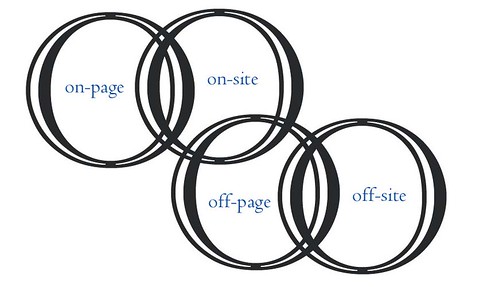
on-off page-site SEO by Aleksandar Ratkovic

Thursday, April 14, 2011

Bench Craft Company on the subject of ebay


Charlie Sheen’s use of technology and web 2.0 has earned him big dollars and a ‘winning’ formula for his own personal brand.


The Two And A Half Men star has greatly benefited from his own ability to embrace the internet, exploring all the marketing tools available to him. From breaking a twitter record, to hosting his own internet show on Ustream, the actor has done what few in Hollywood have ever achieved. Parody videos created by fans and websites dedicated to his one-liners are giving the actor non-stop free promotion and this in turn has created an audience of marketers for Charlie Sheen.


His infamous ABC interview gave birth to many of the viral video spoofs we have seen of his ‘radical’ behavior, which in turn, has fueled his twitter fan growth, and other media interview requests. With so many people discussing and sharing his antics, his own brand of controversy has been implanted onto the web, and has helped him sell tickets for his tour dates.


On top of that, Sheen’s regular updates with his fans on twitter provide a direct relationship and route to market. Sure that sounds a little cold, but he does have a following he can reach out to about his products.


Looking at what he did this week, Sheen took the next step in his own web fueled marketing campaign by making a self-parody video. This clever twist gave yet another viral hit to his name, as bloggers and social media re-posted and discussed how outrageous it was to see him spoof himself.


With many dates left on Charlie Sheen’s tour, the actor has a non-stop ‘Bi-Winning’ 24/7 marketing campaign, and other celebrities in the entertainment industry should learn from his online success.


Charlie Sheen’s use of technology and web 2.0 has earned him big dollars and a ‘winning’ formula for his own personal brand.


The Two And A Half Men star has greatly benefited from his own ability to embrace the internet, exploring all the marketing tools available to him. From breaking a twitter record, to hosting his own internet show on Ustream, the actor has done what few in Hollywood have ever achieved. Parody videos created by fans and websites dedicated to his one-liners are giving the actor non-stop free promotion and this in turn has created an audience of marketers for Charlie Sheen.


His infamous ABC interview gave birth to many of the viral video spoofs we have seen of his ‘radical’ behavior, which in turn, has fueled his twitter fan growth, and other media interview requests. With so many people discussing and sharing his antics, his own brand of controversy has been implanted onto the web, and has helped him sell tickets for his tour dates.


On top of that, Sheen’s regular updates with his fans on twitter provide a direct relationship and route to market. Sure that sounds a little cold, but he does have a following he can reach out to about his products.


Looking at what he did this week, Sheen took the next step in his own web fueled marketing campaign by making a self-parody video. This clever twist gave yet another viral hit to his name, as bloggers and social media re-posted and discussed how outrageous it was to see him spoof himself.


With many dates left on Charlie Sheen’s tour, the actor has a non-stop ‘Bi-Winning’ 24/7 marketing campaign, and other celebrities in the entertainment industry should learn from his online success.


bench craft company

San Francisco Giants' Tim Lincecum donates $25,000 to Bryan Stow Fund


Giants ace Tim Lincecum is giving $25,000 to assist the longtime San Francisco fan who was attacked outside Dodger Stadium last month.


bench craft company

New Google <b>News</b> for Opera Mini - Official Google Mobile Blog

So we have rolled out a redesigned Google News for Opera Mini in all 29 languages and 70 editions of Google News. This includes an enhanced homepage featuring richer snippets, thumbnail images, links to videos and section content ...


bench craft company

Groundwater radiation level at nuke plant rises: TEPCO | Kyodo <b>News</b>

The concentration levels of radioactive iodine and cesium in groundwater near the troubled Nos. 1 and 2 reactors at the Fukushima Daiichi nuclear power plant have increased up to several dozen times in one week, suggesting that toxic ...


bench craft company
Apple has reportedly become more aggressive in securing components from overseas suppliers, making moves such as upfront cash payments to both ensure supply and block out competitors.


Analyst Brian White with Ticonderoga Securities said in a note to investors on Thursday that Apple began "aggressively attacking" the component situation in Japan following the earthquake and tsunami that struck the country. The iPhone maker reportedly sent executives to suppliers immediately to ensure adequate supply of components, and also began offering upfront cash payments.


Separately, White's contacts in Taiwan also revealed that Apple is allegedly securing component capacity using what is known as a "three cover guarantee," referring to capacity, stock and price. Apple's move is seen as one that could potentially block out competitors and prevent them from building ample supply of devices.


The information comes as a separate report out of the Far East suggested that a one-month delay for Research in Motion's PlayBook tablet was as a result of Apple securing most of the available touch panel production capacity. The delay has forced the PlayBook to go on sale after Apple's in-demand iPad 2.


Last month, it was said that Apple could agree to price hikes in order to secure touch panel supply, particularly in the aftermath of the Japan earthquake. Apple was said to be in talks with component makers about touch panel pricing, and allegedly considered some price increases in negotiations.


In the company's last quarterly earnings call, Apple Chief Operating Officer Tim Cook revealed that Apple had invested $3.9 billion of its nearly $60 billion in cash reserves in long-term supply contracts. He declined to reveal what components Apple had put its money toward, citing competitive concerns, but said that it was a strategic move that would position the company well in the future.


Analysts largely believe that the secret investment was related to touch panel displays that are the centerpiece of devices like the iPhone and iPad. One cost breakdown estimated that such an investment could secure Apple 136 million iPhone displays, or 60 million iPad touch panels.


It's a move similar to 2005, when Apple inked a major deal with Samsung to secure longterm supply of flash memory. NAND flash would go on to become a major part of Apple's products, including the iPhone, iPad and new MacBook Air.


bench craft company

bench craft company


It’s not such a wonderful time to be a doctor, patient, hospital, health plan or pharma company, but judging by the quality and quantity of entries received for this edition of the HWR, it’s a wonderful time to be a wonk.


A couple weeks ago CMS released draft rules for Accountable Care Organizations. Several bloggers weighed in on that development:


  • Mark McClellan and Elliott Fisher at Health Affairs provide some historical context and argue that “those who care deeply about health care reform all have a common interest in the success of ACOs as a way of avoiding more classic fee-for-service payment cuts to providers.”

  • On a more downbeat note, The Road to Health concludes, “Dr. Berwick and his colleagues at CMS appear to have taken the ACO concept and made it into a financial program that only delusional practice administrators, or physician organizations bent on financial self-destruction, could love.”

  • The Healthcare IT Guy expects ACOs to be “far more lucrative and disruptive than Meaningful Use and likely to yield more patient quality improvements.”

  • GE Healthcare puts the emphasis on ACO change management challenges: “Healthcare executives and management teams are left to focus on preparing their organizations for a cultural shift of seismic proportions.”

  • HealthBlawg reviews the proposed rules and produces 8 takeaways. #2: “This is the Frankenstein regulation: A Medicare beneficiary must sit on the board of the ACO, CMS must approve all marketing materials before they are used.”


In the midst of the battle over funding the 2011 budget, House Budget Chairman Paul Ryan came out with a plan to radically restructure Medicare and Medicaid starting in 2012:


  • The Apothecary likes much of what he sees and thinks the proposal may force Democrats to devise a credible plan of their own

  • John C. Goodman’s Health Policy Blog contrasts PPACA and the Ryan plan. “Obviously, the path we are on leads to an impossible place. So the only question is whether we are going to get off the current path in a planned, orderly way or whether we are going to let unplanned chaos do the trick.”

  • Wright on Health is less impressed and wonders, “if Rep. Ryan is so adamant about reducing the deficit, why is he cutting taxes for the wealthy and cutting programs for the poor and the elderly?”

  • Managed Care Matters is decidedly unswayed. “If you were looking for real solutions to the health cost problem, you’re going to be sorely disappointed… Unfortunately, he’s fallen into the same trap his Democratic colleagues did with their version of health reform – the Ryan plan does little to address costs.”

  • The Incidental Economist takes issue with Ryan’s plan to convert Medicaid to block grants and cut spending. “Should Medicaid be cut back, more people will be uninsured. Contrary to what some wish you to believe, those who become uninsured will suffer worse health outcomes”


As if the ACO rules and Ryan plan weren’t enough, there’s more on Medicare in the blogosphere:


  • The Covert Rationing Blog –always good for a lighthearted pick me up– “asserts that we are one giant step closer to the day when it will become illegal for all Americans to spend their own money on their own healthcare.”

  • Dr. Liberty discusses CMS’s deliberations on whether to pay for Provenge, a pricey prostate drug. “Decisions are made on the basis of politics, and the drive is to cover everything, leading to higher costs.”


Amid all the federal policy blogging, there’s still some room for technology talk:


  • Healthcare Talent Transformation has had it with Health Net’s repeated goof up’s leading to loss of confidential data. Although it may seem like there’s not much the average person can do, the blog argues, “You can make an impact on the security of your sensitive data by conducting due diligence when it comes to your insurance provider.”

  • The Healthcare Blog offers a video collage of the new Kaiser Permanente Center for Total Health. “The Center is  a pretty fascinating place–part tech and idea showcase and part meeting room. Certainly no other health care organization that I’m aware of has spent so much on a place designed to stimulate the imagination and enhance conversation–under the nose of the folks on Capitol Hill.”

  • Meaningful HIT News features a podcast with mHealth Initiative’s Peter Waegemann, who’s shifted over from EMRs to ride the mobile wave

  • Healthcare Economist delves into new papers that, “examined how to develop accurate algorithms to account for cancer stage in studies using claims data.”


It was encouraging to receive a couple submissions about  journalism:


  • Disease Care Management Blog asks, “Is the kerfuffle over National Public Radio (NPR) the long delayed comeuppance for liberal bias run amok, or a narrow-minded attack on the inconvenient truths from journalistic excellence?” The blog reaches into the world of medicine and discusses of “framing” and its impact on patient decision making to provide an answer

  • HealthNews ReviewBlog cites, “daily evidence of the need for improvement in health care journalism – especially when we see examples like hype of a tiny, preliminary study of strawberries for esophageal cancer.”


We always have room in the Health Wonk Review for some posts on medical ethics:


  • Nuts for Healthcare looks at the pharma industry and concludes, “Doctors need to take a more definitive stand against the specter of industry influence. A good target? Industry sponsorship of continuing medical education.”

  • Health Care Renewal is concerned that so-called government run programs are more private than we think. “The majority of Medicaid has been out-sourced to private health care insurance companies… We need to have some real discussions about the rise of corporatism in US health care, in other aspects of US society and around the world.”


And finally, a few odds and ends


  • Workers’ Comp Insider provides resources for employers concerned about radiation exposure

  • Colorado Health Insurance Insider chronicles the decline of bipartisanship in the creation of a health insurance exchange for that state. “Healthcare reform has become such a polarized topic that it’s difficult for lawmakers to have any stance other than for it or against it.  Even though the health insurance exchanges would be marketplaces that sell private health insurance, the word ‘exchange’ has been thrown around so much during the reform debates that many opponents of the PPACA see it as synonymous with ‘ObamaCare.’”

  • Last week I went to a health care direct to consumer marketing conference to see former TimeWarner CEO Jerry Levin interviewed by OrganizedWisdom CEO Steve Krein. I also shared my thoughts in the video clip below


Thanks for reading the Health Wonk Review! The Incidental Economist hosts the next edition.


One important thing about cities is their sex appeal — their magnetism. Places flourish when they attract people, resources, opportunities, and ideas, and match them to one another. Cities are much more than the built environment of roads and real estate. Cities are about relationships, and whether people have access to opportunities. Cities are one big dating game.


When cities lose their magnetism, the whole population suffers. The deterioration of Detroit began well before recent auto industry woes; its population plunge was confirmed by the latest Census. Some attribute decline to bad urban redevelopment schemes or corrupt politics that failed to improve schools or reduce crime. "A once-great American city today repels people of talent and ambition," a Wall Street Journal columnist wrote recently. A local leader told him, "It's been class warfare on steroids, and ... so many Detroiters who had the means — black and white — have fled the city."


Cleveland is another shrunken city with significant poverty. In the 1980s, Cleveland Tomorrow, a coalition of major company CEOs, sponsored downtown projects, including a new baseball stadium and the Rock and Roll Hall of Fame. This attracted luxury apartment developments, luring the affluent to the center city and revitalizing it. But inner city ghettoes were barely touched, and the region continued to lose high-wage manufacturing.


There's a tale of two cities within many city borders: one rich, the other very poor. Dubai, a gleaming new city of luxury high rises, is ringed by hidden slums for temporary service workers from the underclass of Asian nations. In New York, the middle class, including young families, cannot afford to live in the city. Baton Rouge has affluent areas with some of Louisiana's best quality-of-life indicators and extreme poverty areas with some of the worst. Other divides include racial and ethnic enclaves that vary in opportunities — for example, minority entrepreneurs with promising business ideas who can't access mainstream sources of capital and support.


Cities should be connectors but can have connection problems. Cities are where all parts of life come together: jobs, health, education, environmental quality. Yet, in most cities, businesses, schools, hospitals, and city services still operate in silos. And the political boundaries of cities don't encompass their true extent or the flow of people, as the Brookings' Metropolitan Policy Center points out. IBM's Smarter Cities Challenge supports efforts to use technology for connected regional solutions.


Interdependence among urban issues makes vicious cycles worse. If there is no action on high youth unemployment or poor educational quality and high school dropout rates, then too many African-American males end up in prison. High crime rates make sections of cities undesirable, and neighborhoods deteriorate. Aging buildings and toxic environments then cause health problems, such as lead poisoning or asthma, which disproportionately affect inner city children. Children in poor health have trouble learning, learning problems are associated with school dropouts, and vicious cycles continue.


Pivotal investments can start virtuous cycles. The transformation of Miami from sleepy southern city to international trade hub and informal capital of Latin America was propelled by investments in a world class airport and a flood of immigrants from Fidel Castro's Cuba. Mayors and civic leaders took advantage of this to attract new businesses and tout Latin connections, as my book World Class describes. But progress stalls if benefits don't reach the grass roots, racial divides persist, and major institutions fail to collaborate. The Miami Foundation's emerging leaders program is designed to deploy diverse younger professionals for major civic projects.


Revitalizing cities requires national urban policy investments and social innovations on the ground. Leadership might come from:


  • Enlightened mayors who build public-private partnerships or join Cities of Service, which align the city and non-profits around high-impact goals.


  • Business leaders, such as former Miami Herald publisher David Lawrence, who rallied Miami-Dade County to vote for a tax increase (Yes to new taxes!) to create the Children's Trust, a fund to improve life for all children.


  • Faith communities, such as Rev. Raymond Jetson's community organizing toward a coalition for "A Better Baton Rouge."


  • Financiers, such as Tim Ferguson and Ron Walker, who co-founded Next Street to invest in inner city businesses.


  • Social entrepreneurs, such as Hubie Jones, who wants to replicate a birth-to-college educational model like the Harlem Children's Zone in Boston.


  • Community foundations with a strategic perspective, seeking integrated solutions across issues such as youth employment, education, health, and green plans.


The best social innovations will connect people and institutions, producing an infrastructure for collaboration. That social infrastructure will increase the sex appeal of cities by going beyond initial attraction to build lasting relationships for lasting improvements.


bench craft company

Google <b>News</b> Blog: New Google <b>News</b> for Opera Mini

While the Google News team has been hard at work redesigning our service for smartphones, we've also been thinking about our milllions of users around the world who access the web not from a smartphone, but from a feature phone, ...


bench craft company


HealthLawProf Blog: MRSA <b>News</b>

TrackBack. TrackBack URL for this entry: http://www.typepad.com/services/trackback/6a00d8341bfae553ef01538dd79809970b. Listed below are links to weblogs that reference MRSA News: ...